MENU

How to do process control with less investment and manpower

The benefits of process analysis with FTIR technology are well proven, but gains for users have come at a price in terms of running costs and manpower required to keep everything running just right. In this expert Q and A, we explore how a new chapter in the FOSS process analysis story now promises to make process analysis of liquid milk a whole new ball game.

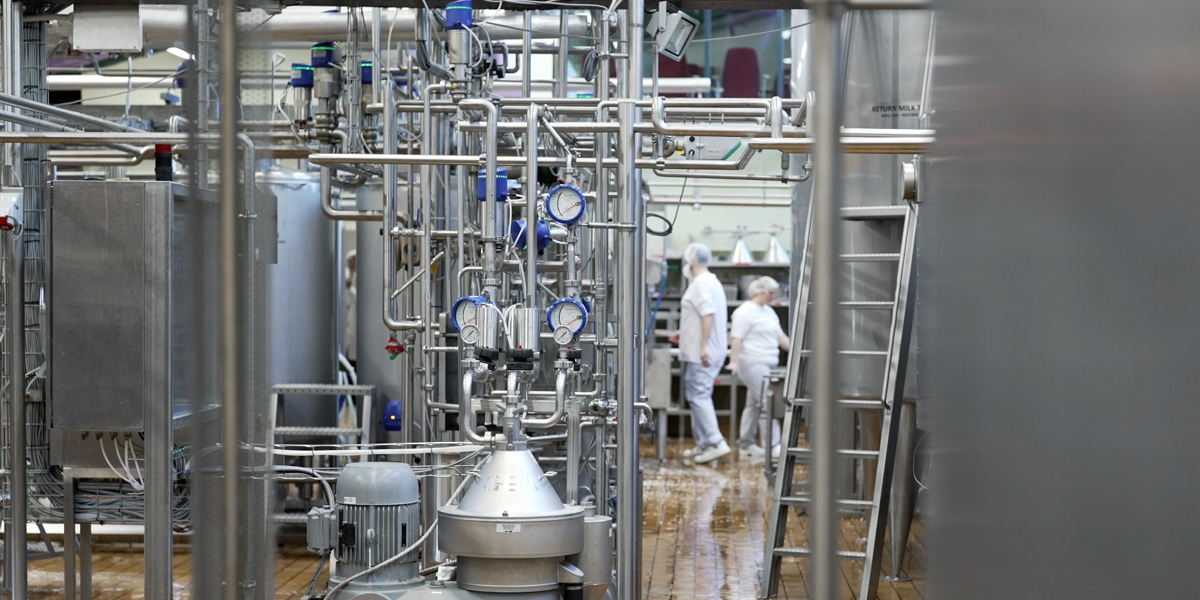
Based in New Zealand, FOSS Pacific Key Account Manager, Campbell McCracken, has over twenty years of experience in implementing Fourier transform infrared (FTIR) solutions in dairy processing environments. He has witnessed the development of FTIR testing for process control up-close and in recent months has experienced how the latest ProcesScan™ 2 now makes the process control of liquid milk an altogether smoother, more efficient and cost-effective proposition (fig 1). We caught up with him for some key questions relevant for any dairy considering a move to the latest FTIR platform for process control.


ProcesScan 2 baner

Figure 1


You have followed the story of process control with FTIR for many years. Can you briefly explain why there has been so much focus on FTIR as the right technology for the job when it comes to liquid milk?

Having experience with both near infrared (NIR) and FTIR technology for milk standardization applications, it is pretty clear to me that FTIR is superior to NIR, particularly for protein analysis in standardized milk streams. It is far easier to develop reliable, robust, global prediction models with less samples for FTIR applications, due I’m sure to the access to clear information within the mid-infrared spectra. This provides for stable, accurate calibration models, minimizing the need for frequent slope/intercept adjustment. In my experience, it is different with NIR. Calibration development requires much larger data sets and regular monitoring of instrument performance along with frequent bias adjustments to optimize instrument accuracy.


Can we describe the FOSS ProcesScan 2 as a new milestone and if so, why?

A number of points spring to mind, for example, there’s the fact that there’s a result every 10 seconds and this is based on monitoring actual milk samples taken over eight of those 10 seconds. This means we’re getting a much more representative sample compared with our previous generation product. Another highlight that must be mentioned is that the instrumentation is always standardized. Following the same principle developed with the FOSS MilkoScan™ FT3, we are constantly standardizing the instrument (at every zero setting) meaning the instrument will have zero drift. This ensures stable predictions enabling maximum yield opportunities for our ProcesScan 2 users.


New users of the ProcesScan 2 solution report that it can be up and running in as little as two days – is this really possible?

Yes. Having done a couple of installations myself, it is quite doable as long as preparations have been made at the site. This includes the production of an instrument stand, ran power and ethernet cables, water supply and the FOSS-provided varinline welded into the process pipe. If the right preparations are made, the installation can be done inside a day. Outside of that, some automation programming is required, so assuming this is done in advance of FOSS engineers arriving on site, the second day can be used to test the automation via OPC UA is working. Literally, the ProcesScan 2 could be standardizing product at the end of the second day.

If the right preparations are made, the installation can be done inside a day


What are the cost of ownership reductions exactly and where do they come from?

A lower upfront purchase price, preventative maintenance is significantly cheaper and there are no customer reagents to buy. Estimating the comparative ownership costs for the ProcesScan FT versus the ProcesScan 2, we’re estimating that the cost of ownership is likely to be about half that of the ProcesScan FT.


There are some developments with the interface to control systems – can you explain?

The ProcesScan FT communicated to the outside World via DDE, which the market has been keen for us to get away from for some time. The good news is that we’ve now moved from DDE to OPC UA with this next generation ProcesScan 2, thus future-proofing our communications. We can also offer communications via kepware should it be required.


The actual instrument, contained within the IP rated box, has a Linux-based built-in PC. This PC communicates to the outside world via one of three ethernet connections, enabling connections to PLC/SCADA, IXQ (FOSS next generation digital service product) and a local connection for a service engineer or calibration person directly via a laptop.


Access to the instrument software is a web browser – so it’s pretty simple.


Likewise, there has been a lot of progress with so-called FOSS digital solutions. Please explain how these add value?

Digital services compatibility via FOSS IQX™, enables remote management of the instrument or instruments for users with multiple installations, from any internet enabled PC. This means the instrument can actually be in use, standardizing valuable liquid milk streams while a manager, service engineer or calibration person evaluates calibration data, monitors check sample data, checks for errors or warnings, all at the same time the instrument is in use.


Data is backed up in the cloud automatically, so should a PC fail, data is not lost and the instrument configuration can be restored quickly.


How does the new solution contribute to sustainable production, for example through more efficient automated processes with less waste?

By providing an accurate means to monitor standardized milk streams, we are helping to make the best possible use of valuable ingredients while producing consistent, high-quality products within specification. At the same time, the data helps to minimize out of specification product requiring re-work and effectively enables more producers to get more out of the incoming raw materials.


Availability of skilled manpower in the dairy is a growing issue, how can this solution help to alleviate the problem?

As far as a plant operator is concerned, the ProcesScan 2 is just another piece of stainless steel out on the factory floor. In fact, it would not surprise me if operators in the future, do not know what the instrument producing their composition results on their HMI, even looks like! Such is the interaction required by operation staff.


Taking on a new process control solution can be something of a leap of faith – can we really believe in this new solution?

This is not FOSS’ first attempt at providing an on-line analytical solution for standardized milk. I can recall solutions from the late ‘80s being used for fat standardization of milk and then with fixed filter technology in the ‘90s. The first FTIR option, the ProcesScan FT, was released in 1999, based heavily on the very successful MilkoScan™ FT120.


Creating the ProcesScan 2 has been a similar story to the original ProcesScan FT, where we have taken ideas, indeed hardware, from the very successful MilkoScan FT3 and built a process-compatible instrument around it.


Based on the success that many of my customers have enjoyed with ProcesScan FT for milk standardization, my expectation is we will see the same with this new generation product, but with broader use.  We have a better business case with this new instrument, a lower purchase price and a projected lower cost of ownership. These things combined make this an attractive solution.


Summing-up - what do you see as the main difference between ProcesScan and ProcesScan 2?

It is a more forgettable solution! That might sound negative, but not the context of today’s dairy processing. The original ProcesScan FT requires more attention from the operator, for instance, to regularly check the clean/zero solutions, to monitor zero setting, to run cleaning procedures and such like.


Much of this goes away with ProcesScan 2, so it could be that operators will forget what the ProcesScan 2 even looks like.


Continue the discussion with a process analysis expert

Alli Wilson 
North America
Alli Wilson

aeramo@fossna.com

Andres Cepeda 
South America
Andres Cepeda

acepeda@foss.dk

Hubert Goeft 
Northern Europe
Hubert Goeft

hg@foss.de

Paul Kirwan 
Britain and Ireland
Paul Kirwan

pkirwan@foss.co.uk

Campbell McCracken 
Asia/Pacific
Campbell McCracken

cmccracken@foss.com.au

Claus Jes Petersen 
Scandinavia
Claus Jes Petersen

cjp@foss.dk

Are you ready to turn analytical data into actionable insights?

Get in touch with our specialists to discuss how you can improve yield, reduce variation, and make the most of raw materials. Let's talk

Stay informed - with insights and news from FOSS

Stay ahead of your competitors! Get fresh knowledge and valuable insights about trends, challenges and opportunities related to analytics in your business, directly in your inbox.

Something went wrong!

Sorry, we were not able to send your form.
back to top icon
The content is hosted on YouTube.com (Third Party). By showing the content you accept the use of Marketing Cookies on Fossanalytics.com. You can change the settings anytime. To learn more, visit our Cookie Policy.