The pasta market has changed. What used to be a choice between a few familiar shapes of dry pasta has grown into a wide range of products: fresh pasta, pasta with eggs, gluten free varieties, high protein options, and plant based alternatives. This development places new demands on production while keeping traditional expectations firmly in place.
For pasta manufacturers, long standing challenges remain unchanged. Variability in durum wheat supply, fluctuating raw material prices, maintaining final product quality, securing shelf life stability, and protecting margins all continue to shape day to day production decisions.
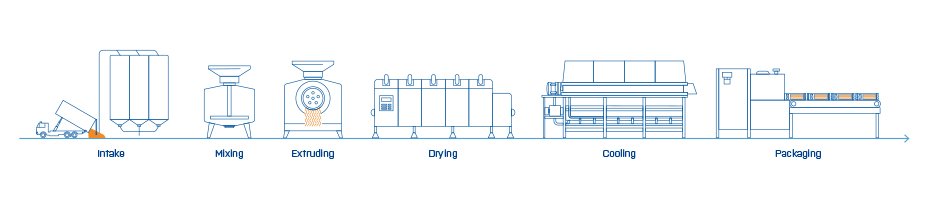
Reliable pasta testing supports these decisions by giving you analytical insights at each step of the process. With accurate measurements, you can evaluate incoming raw materials, monitor key quality parameters during production, maintain consistent product characteristics, and protect the texture and appearance that consumers expect.
Quality parameters such as moisture, protein, and ash in semolina and other raw materials can be measured without sample preparation. During production, dough, extruded pasta, and finished products can be analyzed to track uniformity and detect deviations early. This testing can be performed using intuitive benchtop instruments or in line solutions that deliver continuous data directly from the production line - supporting steady, predictable production.
Durum wheat testing for stable pasta production
Durum wheat quality is central to stable pasta manufacturing. Critical measurements such as protein, moisture, gluten strength, and ash influence dough behavior, color, and drying characteristics. By testing these properties in incoming wheat or semolina, producers can manage raw material variability, maintain stable production from the start, and support profitable production across different pasta types.
Insights add value