The rendering industry has always played an important role in making the very best out of the leftovers from meat production – a role that is only becoming more important as a practical example of making the very best use of resources in our supply chains.
Something that is new, however, is that the demands on the quality of rendering products such as bone, feather, fish meal and hydrolized protein are becoming more stringent and complex. In the dynamic pet food industry for example, the diversity of modern pet food product offerings is setting the bar higher for the rendering products used in highly-regulated pet food products.
Where once it was perhaps enough to know about the protein content, rendering producers today also need to understand the level of ash and fat in the bone meal used in their production runs. As Lipitalia owner and director, Mario Grosso explains in a video interview for FOSS, many of his customers require specific levels of key components to fit with their pet food products. “Many of them say, Okay, I want this level, I do not want higher, otherwise it will not work in my formula,” he says.
Helping Lipitalia to match the demands from their customers are near infrared (NIR) analytical solutions that deliver reliable data for critical quality control parameters. This information allows production controllers to monitor production and make adjustments as required. Profit is optimized and waste minimized, while customers can look forward to consistent quality products that fit hand-in-glove with their product specifications.
In the site laboratory, a benchtop NIR instrument provides versatile testing of meal products and hydrolyzed protein. Samples are simply presented to the instrument, which then delivers results within a minute. Meanwhile, out in production, a ProFoss analyzer (inline NIR) provides even closer control of bone meal.
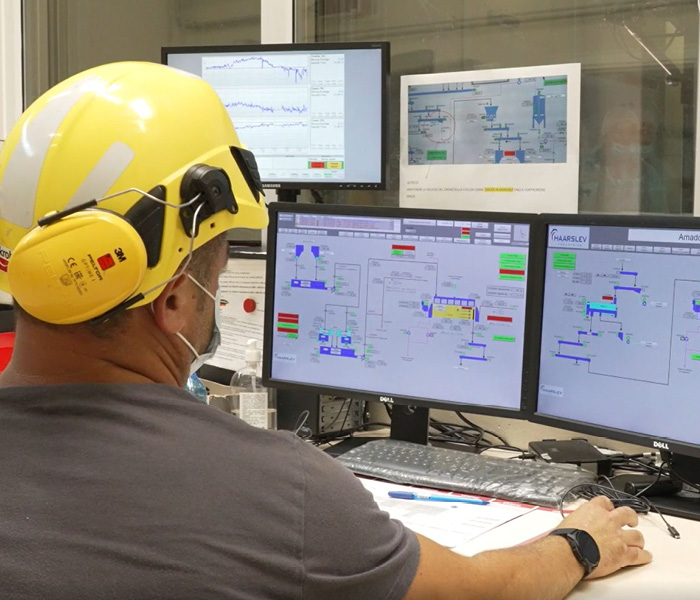
Installed directly in the production line, it measures fat, moisture, protein and ash every few seconds. A constant flow of data empowers production controllers to fine tune production on-the-fly so that production targets are always met spot on. “If you are able to check continuously, you can deliver the right product to fulfill the request”, says Mario Grosso.
The business case for the instruments has become very clear, for example, with a payback time of around four to five months with the in-line solution.
Watch the video to get the full story.