How would you describe your winemaking style?
I like to combine traditional winemaking techniques and creativity with the unexpected. I enjoy building on what I learned from the previous vintage and continuing to improve upon it each year. It’s important to stay up to date on what is relevant to consumers as well as continuing to learn from the talented winemakers that surround me.
What was the 2022 vintage like for you – did any grapes stand out as particularly good last year – and how is the 2023 vintage shaping up?
Every vintage comes with its own challenges. In 2022, we were challenged by a mid-harvest rain, which slowed the ripening of our Petite Sirah and Teroldego, leading to a longer harvest season. These conditions also contributed to higher green attributes in Merlot. On the other hand, we had some real standout lots of Zinfandel, Cabernet Sauvignon and Syrah from our Lodi sites. This is the fun of working at Apothic, as we’re able to take all these different characteristics and flavour profiles and blend them into a bold, layered wine.
The 2023 harvest is looking to be a later one due to the abundant rains and cooler temperatures we experienced in spring and early summer. We’re excited to see our vineyards going through veraison right now, meaning harvest is just a few weeks away. We’re busy preparing at the winery for the harvest season.
Apothic is famous for its red blends – do you think blends are able to achieve greater complexity and nuance than single varietal wines?
I’m incredibly lucky that I get to be bold with innovative new red blends as well with varietal wines. Red blends allow for greater flexibility to balance the characteristics of different grapes, which can create a profile that showcases all the best features of those grapes in one cohesive wine. It’s not that a blend is more or less complex than a single varietal wine, but it creates a unique drinking experience, as every blend is different.
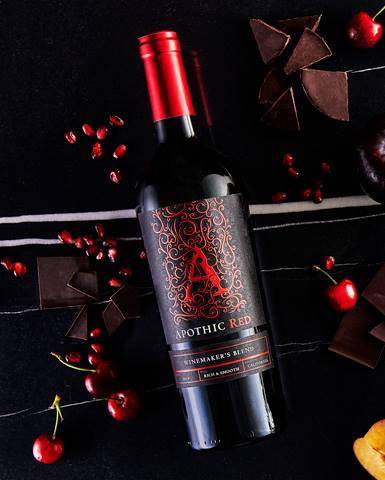
Creating a smooth texture is a priority for you, how do you achieve this?
We’re out in the field all year looking for the perfect vineyards sites that offer grapes with the softest tannins and highest fruit intensity. When the fruit arrives at the winery, we ensure we’re fermenting it at the right temperatures and draining/pressing off skins at the right time to capture the tannins when they’re in perfect balance with the fruit.
American palates traditionally favour sweeter wines to UK/European palates, is this still the case or have you noticed that things are changing?
American palates are definitely evolving over time. While there is no singular palate for everyone, Americans are still enjoying sweeter wines overall, but are also showing interest in traditional dry wines that have a story behind them.
Do you embrace vintage variation in your wines or are you seeking to create a consistent style every year?
It’s important that Apothic is delivering consistent wines every year while still allowing the intrigue of each vintage to show through. I’m working to ensure that we are selecting the best vineyards for our wines and, once they’re in the cellar, that we’re ageing them in the right oak format for the right amount of time. I’m not afraid to try new techniques, grapes or oak regimes to push our wines to be the best that they can be.
Being known for your reds, have consumers also embraced your rosé, white blend and recently released Chardonnay?
It’s always great to see the excitement and interest around any of our new additions to the Apothic portfolio. We love having the diversity of our white, rosé and Chardonnay in the Apothic family as it gives us a chance to express our point of view on these blends. The rosé and white blend have a creative flair, while the Chardonnay is our take on a traditional wine. For all three, we’re seeking brightness, boldness and depth of flavour.
What’s hot right now in the US market in terms of grape varieties, regions and wine styles?
As a winemaker, I focus first and foremost on crafting the best wine possible from each vintage. Trends in wine can come and go, so you have to stay true to what you’re making and why. High quality, palate-pleasing wines with a strong point of view will always find an audience.
What are the biggest challenges currently facing the California wine industry and how are you seeking to overcome them?
One of the ongoing challenges facing the wine industry in the US is attracting the attention of Generation Z and Millennial consumers. Their interest in the wine category is not as strong as it was for earlier generations at the same age. Fortunately, Apothic is a wine that welcomes these new younger consumers – it’s currently the number two premium wine brand for bringing in new buyers in the US. The brand isn’t intimidating or pretentious. It offers a great taste and we’re always looking for interesting new ways to drink our wines, whether that’s through one of our seasonal experience suggestions or enjoying it in one of our Apothic cocktails.
Climate change is a big issue around the wine world – in what ways are you working to mitigate its effects?
Sustainability is something that is critically important to us. We’re committed to environmental, social and governance practices that will allow future generations to thrive. One of our core goals is to reduce our impact on the environment, including working towards our goal of a Net Zero carbon economy. Our winery is ISO 14001 Certified and all of our California vineyards are certified sustainable by the California Sustainable Winegrowing Alliance. Our vineyards use Integrated Pest Management, part of over 200 vineyard management best practices we use to optimize our sustainability and biodiversity.
We’re also actively working towards energy and water efficiency, including reducing water usage in our vineyards, recycling and reusing our process water, and using alternative energy at the winery, such as biofuel, which we make from winemaking by-products. Beyond the vineyard and winery, we’re also working to make our packaging more sustainable. Apothic wines are now packaged in lighter-weight glass bottles, lowering both our raw material usage and transportation-related emissions.