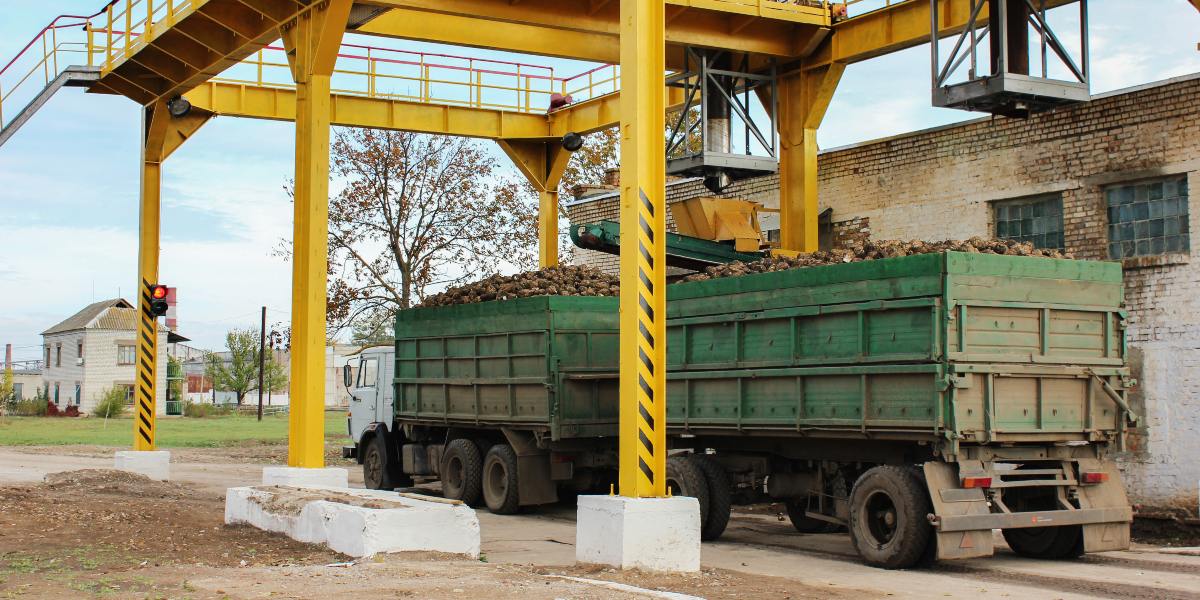
Producing up to 14 million tons of sugar a year, Thailand is a major exporter of raw and refined sugar second only to Brazil. Originally the cane crop was just used to produce sugar, but today the by-products are also valuable in powering the local infrastructure through raw material for ethanol and electricity production. The by-products from sugar production are also used to produce fertilizer, biodegradable packaging, and other products.
However, the industry remains vulnerable to an unpredictable climate with the impact of last year’s El Nïnõ serving as a stark reminder of how important it is to always make the very best of the cane crop. This is exactly what rapid and versatile near infrared analysis is designed for and, in Thailand’s dynamic sugar industry, the technology is showing just what it can do. The handy and easy-to-use analysis instruments are proving a great way to put key process control data in the hands of quality and production controllers, helping them to achieve greater efficiency and yield throughout production. Khon Kaen Sugar PCL. is a case in point making good use of the technology to achieve gains on several levels across the organization.
Multiple parameters in one simple test
On the one hand, the results help to improve productivity and output and on the other, the rapid, chemical-free tests reduce the burden and cost of traditional testing. Near infrared (NIR) has been used since 2019 and the range of tests includes the quality of brown sugar (pol, color, moisture, reducing sugar, conductivity, ash) and bagasse (moisture and pol).
“We considered it worthwhile because the price of the Brix Meter, Pol Meter, pH Meter and Conductivity Meters combined, can cost more than NIR alone,” says MS. Sopida Suebwongsa, Head of Quality Control Department. “In addition to this, we get results quickly, we save chemicals, there is no need to pay for disposal of hazardous chemicals and we reduce labor costs.” “Using NIR machines is environmentally friendly. No consumable expenses such as chemicals, glass equipment, chemical disposal costs, reduce water use in the analysis process, maintenance cost of analytical instruments.
High-speed testing reduces costs
She describes how the production department receives the analysis results quickly and accurately allowing timely decisions about whether to accept deliveries of cane or reject production lots that do not meet control values. “Results help us to reduce report time faster and timely solve problems in production process,” she says and adds: “Overall, it is considered a big help for the company to save on production costs.”
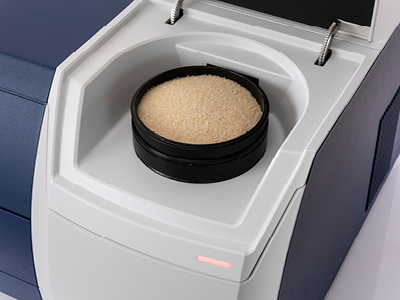
Typical NIR instrument in use
Previously, the reference method according to ICUMSA was used to analyze various parameters. However, the high amount of number of samples made this approach quite cumbersome and complicated. Staff required training and expensive chemicals and consumables all added to the cost of analysis. Summing up, MS. Sopida Suebwongsa says: “After we got the FOSS NIRS™ DS2500 it has helped us to save time spent analyzing sugar. Results can be quickly reported for every desired parameter. It takes no more than two minutes, whereas the original analysis from ICUMSA METHOD for every parameter could take more than an hour to analyze.”
In conclusion, she explains why her department is happy to put its faith in the method as an alternative to traditional analysis. “We chose FOSS because FOSS has long experience with NIR,” she says. “There are also ready-to-use equations and various statistical values such as standard error of prediction, etc to support in ensuring that the delivered NIRS results are reliable.”
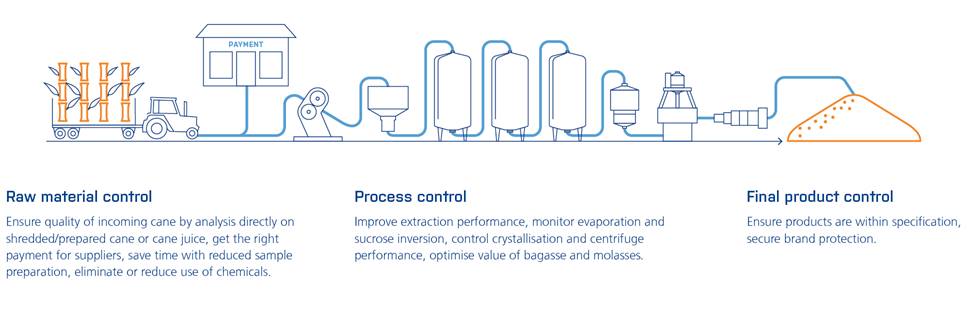
Rapid NIR analysis adds value to sugar cane production throughout the process