Q: Why are minerals so important to measure?
A: In terms of dairy cows, a considerable amount of minerals originates from the basal diet, e.g., grass silage. However, the mineral content in the basal diet is known to vary hugely between, but also within individual farms or silage clamps and thus situations with over or undersupply of certain minerals can easily occur in practice. It is therefore highly recommended that dairy farmers choose mineral premixes based on the mineral test results of their own silage as opposed to working with table results. This ensures optimal supply of minerals. In general, undersupply of minerals in an animal’s diet may lead to underperformance, health, and reproduction issues, whereas oversupply may end up in the environment. Neither of these scenarios support the sustainable use of resources.
A commonly occurring animal health issue is milk fever, which is associated with imbalanced feeding of minerals. It is estimated that economic losses can be as high as 9,000 € per 100 cows, per year, where 20% are due to clinical and 80% are due to subclinical milk fever. In general, prevention of milk fever is way better than cure and thus the so-called dietary cation-anion balance (DCAB) concept, which is based on potassium, sodium, chlorine, and sulphur, is broadly used. In this context, analyzing individual feed components and analyzing the total mixed ration (TMR) may be relevant to ensure optimal feeding.
Q: What is the challenge with mineral testing today?
A: While it is common to determine the nutritional profile of forage, the mineral profile is often not tested and table results (e.g., regional) are used for ration formulation instead. The nutritional profile would typically be analysed using fast and cost-efficient technologies such as near-infrared-based instruments. Mineral analysis, however, requires laborious and tedious methods involving different chemicals and is thus quite costly. On top of that, ration formulation would often be done working with safety margins in terms of minerals to avoid deficiencies. Hence, there is a tendency that animals are overfed with minerals. Last, it generally takes quite some time until the complications of inadequate and incorrect mineral supply can be seen. On the whole, the concept of precision feeding is broadly promoted and discussed but there is still a lot of work to be done when it comes to implementing precision mineral feeding in practice.
Q: What is the current demand for mineral testing?
A: Mineral analysis is often only requested by larger dairy farms or those that already recognize the associated economic and environmental benefits. More specifically, they are considering the mineral profiles of their feed so they can get tailor-made mineral pre-mixes and thus ensure optimal supply of minerals to their animals. This would typically be realized in close collaboration with or in form of a service offered by a company providing mineral pre-mixes.
Q: What will it take to implement precision mineral feeding across the industry?
A: Different approaches could be considered here. First, there is a task to educate the industry about the importance of adequate mineral supply (i.e., no oversupply, no undersupply) to livestock. Second, the method for mineral analysis applied in the laboratory should be more affordable and provide results in a faster way compared to today’s methods. Third, nutrient balances on farms are discussed a lot in terms of sustainability. While nutrient balances are mostly focused on nitrogen and phosphorus today, there could be more attention on other nutrients such as magnesium or manganese and iron in the future. Lastly, regulations defining new maximum contents of certain minerals in feed (e.g., zinc) could be introduced and thus help to reduce or even avoid the environmental impact that oversupply of minerals may have today.
Q: So, why do we need a new method?
A: As often, each method comes with certain advantages and disadvantages. In brief, the ICP method provides highly accurate results, but it is cumbersome, takes several days to generate them and involves the use of chemicals such as acids. The XRF method has a lower turn-around time and is more operator friendly but may have its limitations in terms of detection of important macrominerals such as sodium and magnesium and microminerals in general.
With Micral™, FOSS offers a fast, easy-to-use, and dedicated solution for element analysis. Sample preparation is reduced to a minimum (e.g., drying and grinding) and 60 samples per hour can be analyzed allowing high-throughput and quick turn-around time. This, in turn would allow laboratories to offer, e.g., mineral analysis at a far more attractive price for end users such as dairy farmers and thus enable them to send in more samples for testing.
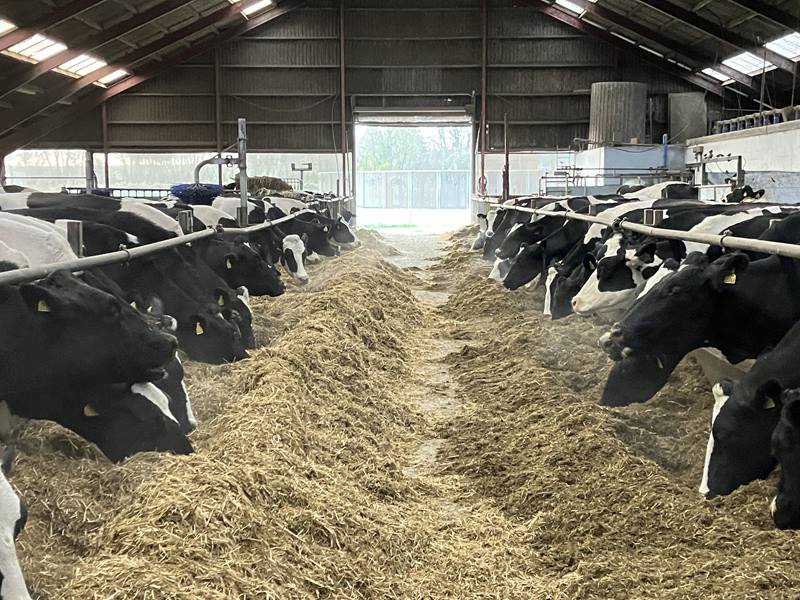
Q: With Micral™, faster data about mineral content is available at lower cost – how will this impact different stakeholders?
a. Farmers
- In brief, mineral analysis of the basal diet may become more affordable and farmers can thus start managing and controlling the mineral supply of their animals in a better way than today. Given the variation of nutritional and mineral parameters in a silage clamp, there is a clear potential to be gained from testing several times per year. Based on actual data, supplementary feed such as mineral pre-mixes, can be adjusted according to the mineral profile of the basal diet at an economic benefit.
b. Laboratories
- Micral will make mineral testing in laboratories significantly faster and easier. This can help laboratories to increase their testing capacity. Precision mineral feeding and other possible changes in the industry may trigger a higher demand for mineral analyses. Moreover, the clearly reduced turn-around time offered by the Micral analyzer, significantly adds to the attractiveness of such a test.
c. Consumers
- Milk and dairy products are generally an excellent source of calcium and phosphorus for adults and children and a good source of potassium, magnesium, and zinc for children. Different studies have found that the concentration of certain macro- and microminerals in milk can vary according to season as well as production method, e.g., organic, or conventionally produced milk. The differences seen in the studies were associated with the relationship of minerals to milk protein (e.g., for calcium, phosphorus, magnesium) but also the diet of the cows (e.g., for calcium, copper, iron, manganese, and zinc). The researchers concluded that due to their findings, the mineral supplementation of dairy cows should be aligned with their basal diet to minimize variation of macro- and microminerals in milk and dairy products.
d. Other stakeholders
- Here I can think of two examples. First, food processors have identified that their scope 3 emissions mostly originate from the farms supplying them with, e.g., meat or milk. Supplying animals with the exact amount of nutrients and minerals needed (i.e., precision feeding) would be an important approach to optimize animal performance and health, optimize the use of resources such as silage and pre-mixes, and reduce the environmental footprint of the farmers in this context. Food processors could somehow incentivize more analytics to foster precision feeding. Second, the different suppliers of mineral pre-mixes could benefit from more detailed information about the mineral content in the basal diet, helping them to adjust the composition of their pre-mixes accordingly and further implement the concept of precision mineral feeding. This would contribute to better and more sustainable use of resources.
e. The environment
- Reducing oversupply of certain minerals in livestock feed will lead to lower concentrations of these as nutrients in organic fertilizers, which are typically used to fertilize fields and thus get back in the environment. Micronutrients such as zinc can be toxic for flora and fauna when they occur in too high concentrations in the soil. However, lower concentrations of nutrients in organic fertilizers would mean lower concentrations in the soil and thus lower uptake by the plants growing there. If these plants are used as feed, lower concentrations of previously oversupplied minerals can be expected as it now occurs with lower concentrations in the entire circular nutrient flow.
Q: What is the future perspective of Micral?
A: The entire agri-food industry has a growing focus on resource efficiency driven by net zero ambitions and consumer demands for sustainable food production. Optimizing nutrient flows in crop and livestock production will be more important than ever to support the green transition. This, in turn, sets new demands on testing capabilities and affordability as well as data (e.g., test results) management. Micral opens up new possibilities in terms of price per test and turn-around time and thus clearly represents a platform for generating highly valuable data that is needed to fully realize, among other things, regenerative agriculture. More specifically, detailed mineral profiles of livestock feed, in particular the basal diet, will help to avoid under- or oversupply of minerals. Analyzing the detailed nutrient composition of organic (and/or mineral) fertilizers would make it possible to optimize their use.
Moreover, plant material could be analyzed to understand the nutrient profile and thus nutrient demand of plants and then fertilize them with exactly the nutrients that are needed and thus ensure optimal growth and yields. A fast turn-around time, which Micral enables, is absolutely essential for these applications to become useable and valuable services for farmers. Lastly, carbon is one of the elements that can be seen in the spectra of the Micral solution. Agriculture harbors an enormous potential as carbon sink through sequestration in the soil. Therefore, measuring carbon in soil and documenting changes over time is of particular interest in the current climate discussion. Without any doubt, there are multiple possible applications of Micral in connection with resource efficiency and the green transition of the agrifood industry in general and more work is needed to further materialize and realize them.


