Micral™ is a fully automated LIBS-based solution designed to dramatically speed up element/mineral analysis in agricultural samples, delivering valid results much faster than traditional wet chemistry workflows.


Why change your workflow
As demand for element analysis grows, Micral™ replaces the slow, costly, chemical- and skill-dependent traditional methods that hold labs back - streamlining the workflow and delivering results you can stand behind.
Accurate, real-time data on mineral composition at a lower cost per sample - with faster time to result from the autosampler and ready-to-use analytics packages.
Forage - grass, corn, alfalfa/legume hay, hay, fresh grass, haylage, mixed hay, sorghum, straw, grass-and-clover and barley silage. Plant leaves - soy, maize, wheat.
6 macro elements - calcium (Ca), magnesium (Mg), phosphorus (P), potassium (K), sodium (Na), sulfur (S). 6 micro elements - aluminum (Al), boron (B), copper (Cu), iron (Fe), manganese (Mn), zinc (Zn).
Fast, and trustworthy
Micral™ is built to give you results you can defend - quantitative readings across all 12 macro and micro elements, including the macrominerals that other rapid methods struggle with.
Explore Micral™ features
Customer story
"Anyone in the lab can run the instrument, so you don't need a certain person who runs it."
Lab Manager, Optilab, Sweden
See Micral™ in actionFrom sample to result
Add nitric and hydrochloric acid › predigest (1.16h) › digestion block (1h) › add HClO4 › Digestion block (2h)
The business case
Start with how long one cassette takes from ground and dried sample to answer, then set either your shift or your daily target to see how the day adds up.
Throughput and turnaround are different questions. One cassette takes 45 to 60 minutes to prepare and about an hour to measure, and the figures below assume the next cassette is prepared while the analyzer runs.
Recommended cassette content, in running order
3 standardization, 3 instrument check samples, 24 samples, 3 standardization, 27 samples. Sixty positions in total: 6 standardization and 3 instrument checks, leaving 51 lab samples an hour.
4 hours shorter than a typical 8-hour shift 3 hours shorter than a typical 8-hour shift 2 hours shorter than a typical 8-hour shift 1 hour shorter than a typical 8-hour shift A typical shift, and the FOSS reference case 1 hour longer than a typical 8-hour shift 2 hours longer than a typical 8-hour shift 3 hours longer than a typical 8-hour shift 4 hours longer than a typical 8-hour shift
How the shift is used
Fits inside a typical 8-hour shift, with 6 hours to spare.
Fits inside a typical 8-hour shift, with 5 hours to spare.
Fits inside a typical 8-hour shift, with 4.1 hours to spare.
Fits inside a typical 8-hour shift, with 3.1 hours to spare.
Fits inside a typical 8-hour shift, with 2.1 hours to spare.
Fits inside a typical 8-hour shift, with 1.1 hours to spare.
Runs past a typical 8-hour shift by about 0.8 hours.
Runs past a typical 8-hour shift by about 2.8 hours.
That is
1
2
3
4
5
6
8
10
cassettes, including the setup hour before the first one runs.
Digital
Micral™ pairs instrument hardware with software and networking connectivity to lift productivity.
Pre-built analytics packages ready to run from day one.
Barcode-based sample IDs keep every result traceable.
Link up your lab for a single, connected view of your data.
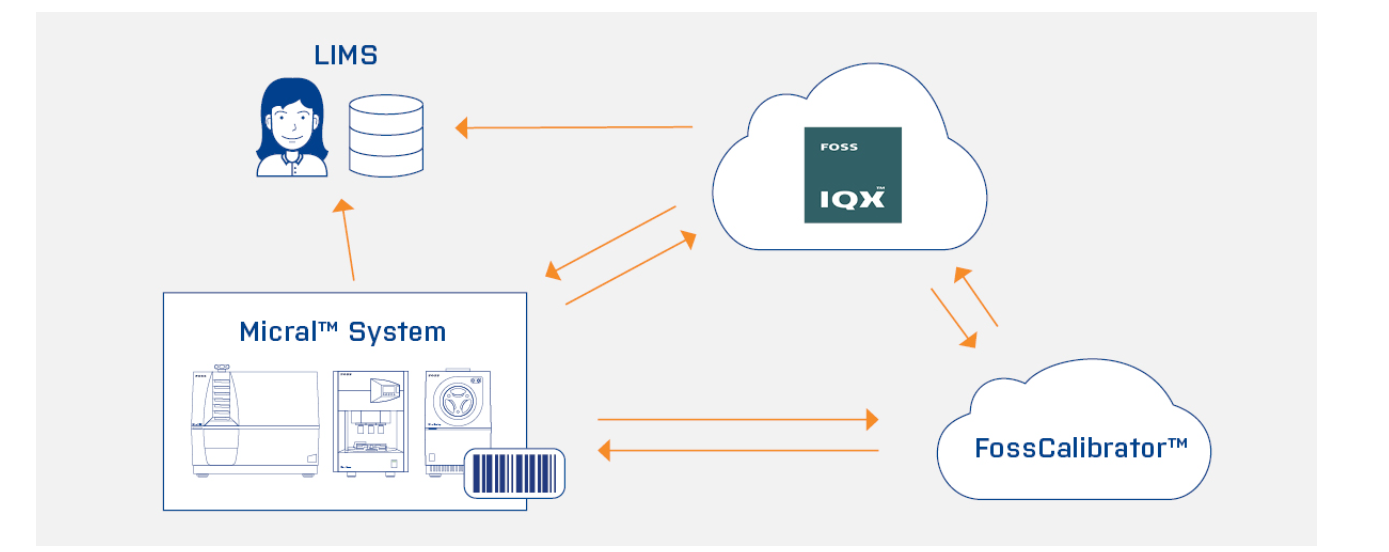
FOSS IQX™ is a suite of software solutions for data-driven decisions across food and agri production, including managing fleets of instruments and supplier collaboration and quality. Read more at IQX.net.
Tailored algorithms
"Tailored algorithms make sure that wavelengths are fully standardized."
From standardized solutions to an extensive sample-analysis database - what it takes to ensure good application models for the 12 elements Micral™ can analyze.
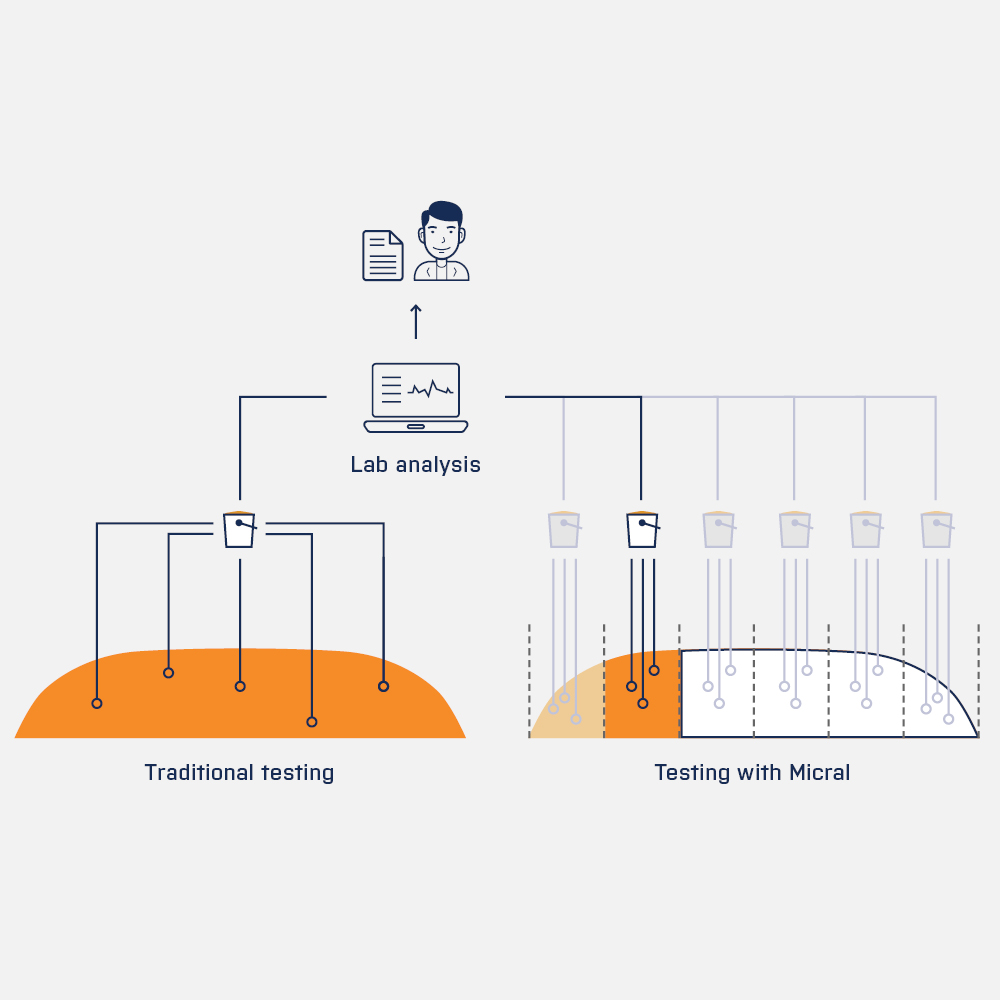
With traditional testing, silage is typically tested only once per year, so results aren't representative - quality changes over time. Faster time to result and a lower cost per sample with Micral™ mean you can test regularly throughout the year.
Micral™ adds accurate, timely data about mineral levels, reducing the cost and the environmental impact of unnecessary overuse of feed additives.
Increase sample throughput while reducing your training and staffing burden. The autosampler cassette lets you run 60 samples in one go. Batch handling significantly improves time to result and contributes to a markedly lower cost per test.
At the same time, freeing staff to do other jobs lets you upscale laboratory capacity for greater efficiency.
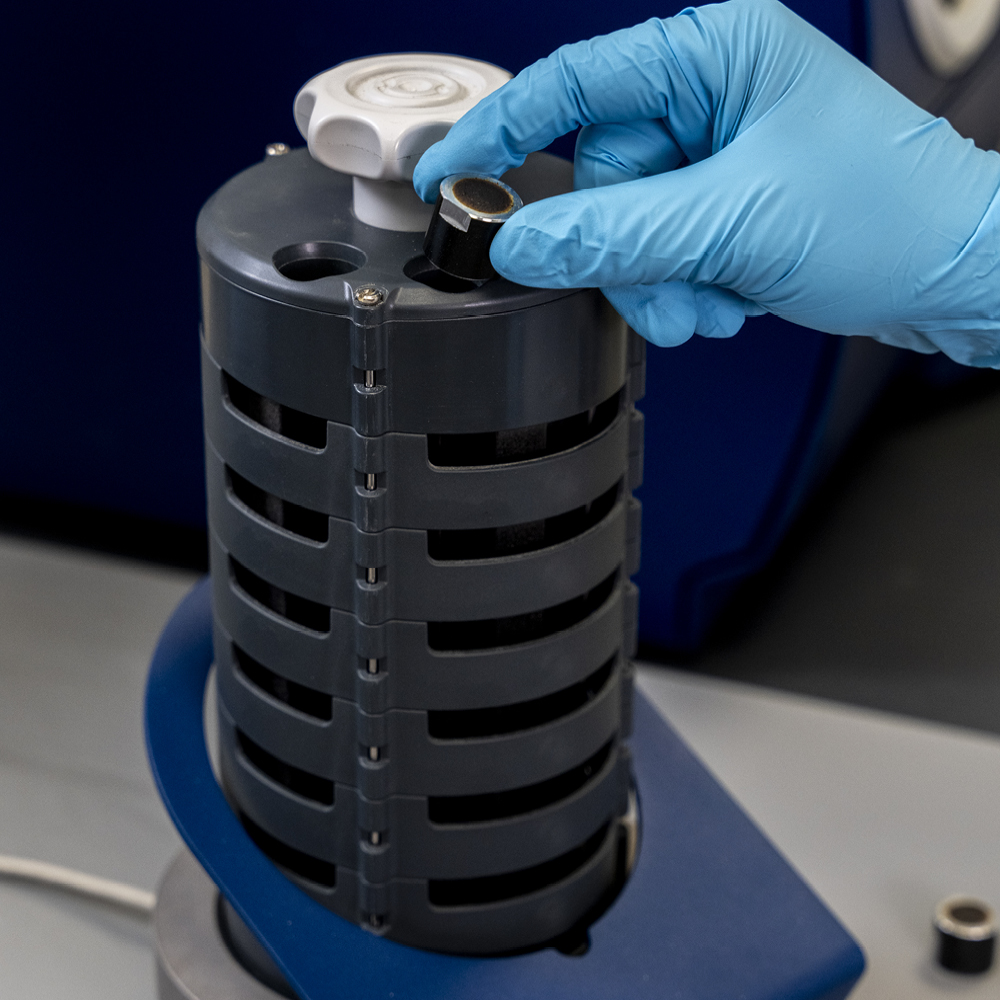

LIBS is an abbreviation of Laser-Induced Breakdown Spectroscopy. It sounds great - but how does it actually work? Learn more about the technology behind the Micral™ LIBS analyzer.
Read articleGet in touch with our specialists to discuss your potential business value.
Let's talkReference
| Analysis time | ~1 minute |
|---|---|
| Autosampler capacity | 60 samples |
| N2 consumption (during measurement only) | 3 l/min |
| Wavelength range | 178-427 nm |
| Optical resolution | 0.1 nm |
| Voltage | 100-240 VAC, 50/60 Hz |
| Power consumption | 100 W |
| Dimensions (W x D x H) | 500 x 471 x 426 mm |
| Weight | 40 kg |
| Voltage | 110 VAC, 60 Hz or 230 VAC, 50 Hz |
|---|---|
| Power consumption | 500 W |
| Dimensions (W x D x H) | 305 x 496 x 434 mm |
| Weight | 100 kg |
| Voltage | 100-240 VAC, 50/60 Hz |
|---|---|
| Power consumption | 90 W |
| Dimensions (W x D x H) | 265 x 496 x 428 mm |
| Weight | 25 kg |
| Bench space | 300 x 80 cm |
|---|---|
| Bench strength | Supports 175 kg |
| Gas requirement | Nitrogen, propane |
| Ventilation | Minimum ventilation rate 150 m³/h |
| PC and network connections | 2 PCs with LAN connection |
| Temperature | 15-30 °C |
| Relative humidity | ≤80% |
Micral™ is a fully automated LIBS-based solution designed to dramatically speed up element/mineral analysis in agricultural samples, delivering valid results much faster than traditional wet chemistry workflows.
Micral™ measures 12 elements simultaneously: 6 macro (Ca, Mg, P, K, Na, S) and 6 micro (Al, B, Cu, Fe, Mn, Zn). It’s positioned for feed/forage matrices such as silage and hay types, as well as plant tissue. And it doesn’t stop there; more applications will be added in the future.
Valid results for dried & ground samples (time-to-answer), with an instrument analysis time of minutes. An autosampler cassette for up to 60 samples enables unattended batch runs, supporting high throughput and freeing staff for other tasks.
Micral™ is designed to reduce workflow friction by eliminating hazardous chemical digestion steps (chemical-free quantitative testing), improving operator safety and reducing environmental risks linked to chemical disposal.
