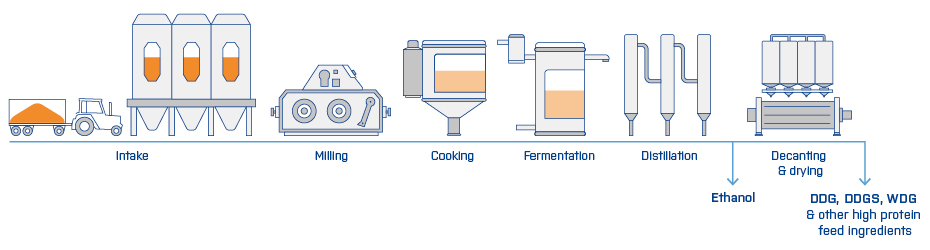
Corn ethanol production is evolving rapidly. As producers face tighter margins, fluctuating raw material prices, and growing pressure to improve efficiency, the role of fast, reliable analytical data is more important than ever. This guide walks you through the essentials of corn ethanol analysis, the critical control points, and the technologies that help producers maximize yield, protect co‑product value, and maintain consistent quality.
Why corn ethanol analysis matters
The corn ethanol industry is shaped by several converging challenges:
• Volatile corn prices, squeezing producer margins
• Pressure to optimise yield and reduce raw material losses
• Need for consistent co product quality, especially DDGS, corn oil, and high protein feed
• Growing importance of data driven processing, including advanced fermentation control and real time process insights
Maintaining stability across starch content, fermentation sugars, moisture, residual solids, protein, and mycotoxin levels is essential. Even small deviations can directly influence ethanol yield and profitability.
How modern analytics transform corn ethanol production
FOSS analytical solutions give ethanol producers the ability to monitor each stage of production rapidly, accurately, and cost effectively.
Implementing NIR (Near Infrared) and automated testing at key control points enables:
• Real time standardization
• Early detection of variation
• Reduced hidden losses
• Stronger process stability
• Better utilization of every kernel processed
As a result, plants can maximize ethanol output while improving the value of their co products.